A practical look at how testing, observability, and release governance must evolve as AI accelerates software delivery cycles.
Faster coding changes the quality equation
AI tools can help teams generate code, tests, documentation, and refactors more quickly. That speed is useful, but it can also increase the amount of change moving through the system. Quality teams need to shift from late-stage gatekeeping to continuous risk management.
The question is no longer only whether a feature works. Teams must understand what changed, what risk it introduced, what signals confirm confidence, and what monitoring will catch issues after release.
Automated tests need better intent
More tests do not automatically mean more confidence. Automated suites should be designed around critical user journeys, business rules, integration contracts, security expectations, and performance thresholds. AI can help generate coverage, but humans still define what quality means for the product.
A healthy suite is layered. Unit tests protect logic, integration tests protect contracts, end-to-end tests protect key workflows, and exploratory testing finds the problems scripts miss.
Quality extends into production
Modern quality engineering includes observability. Logs, metrics, traces, user analytics, error budgets, and incident patterns show how the product behaves under real conditions. These signals help teams detect issues quickly and prioritize improvements with evidence.
Release confidence improves when pre-production testing and production telemetry are connected. Teams learn which tests predict real risk and which areas need better coverage.
- Define quality signals for each critical workflow.
- Track escaped defects and connect them back to missing tests or monitoring.
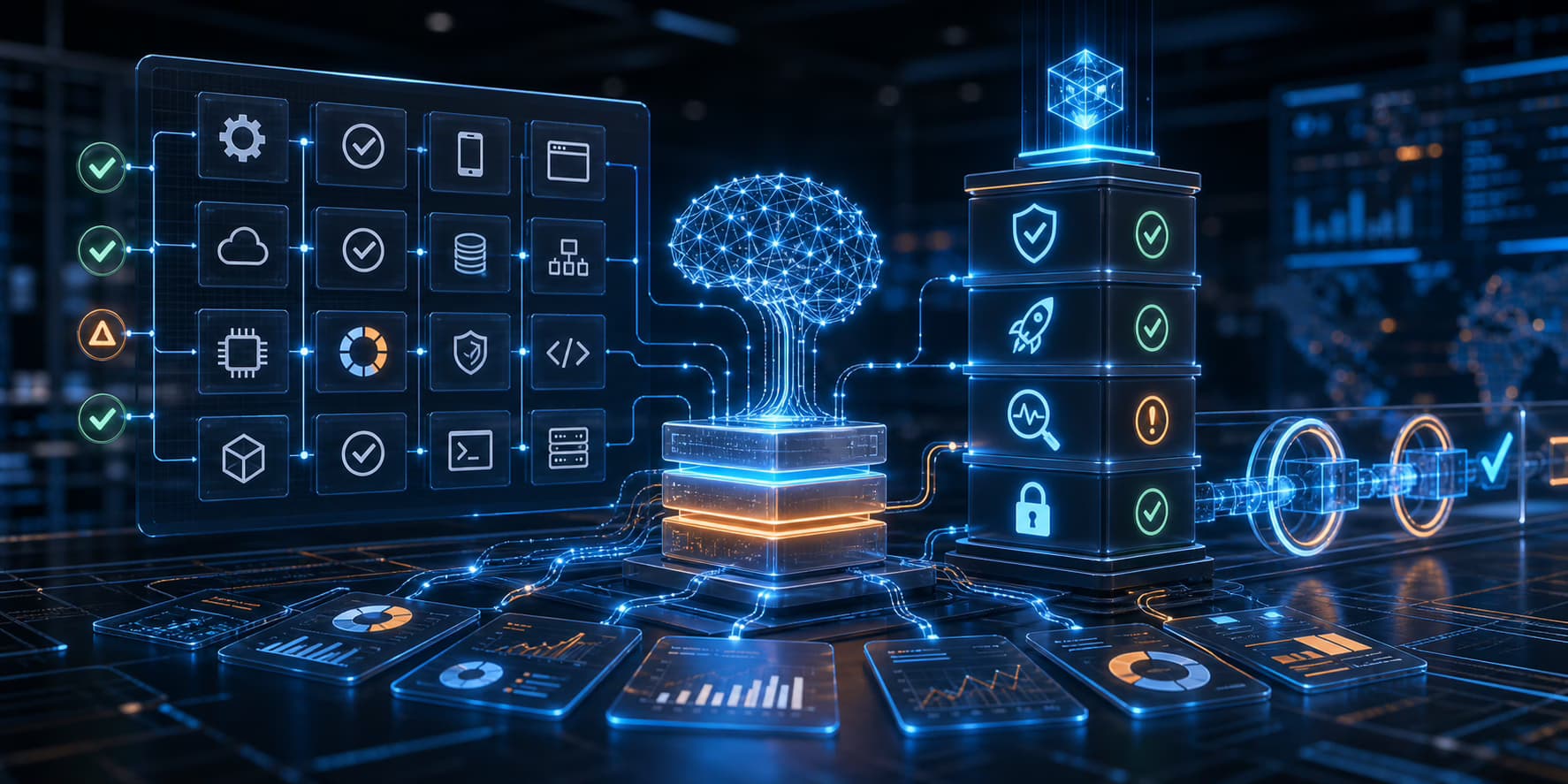
- Use release health dashboards during and after deployment.
AI also needs quality controls
AI-enabled features bring new testing needs: hallucination risk, prompt regression, retrieval quality, bias, privacy exposure, and inconsistent outputs. Teams need evaluation datasets, acceptance criteria, and review workflows that are versioned with the product.
Quality engineering becomes the discipline that helps AI features earn trust. It gives product teams the evidence to release quickly without treating intelligence as unpredictable magic.
Final Thought
AI-augmented delivery rewards organizations that make quality continuous. Speed is valuable only when teams can prove the product remains reliable, secure, and useful.